Just and Unjust Wars

Today I attended a lecture about women pilots in Germany during World War II. On the projection screen at the front of the room, the lecturer showed us photo after photo of these women. Some wore tight leather fighter caps and goggles on their foreheads. Others posed with their dark hair blowing in the wind, a wide grin painted on their unlined faces. And others stood next to heavy silver planes---"Hitler's Flying Floozies," as the lecturer joked.

As I listened to the talk, I thought about the National Air and Space Museum, the place where the lecture was held and also the place where I work. Half of my museum is dedicated to aviation (thus Air and Space) and a significant portion of this half focuses on war planes. Combat aircraft can be found all over NASM---suspended from the ceiling or resting snugly on the museum floor. These planes are pretty artifacts, often painted red or green or polished to a shiny silver. Hundreds of visitors pose in front of them every day. "Look at this, son," they say before snapping a picture, "this plane was used in World War I. Your great-grandpa fought in that war."

So much romanticism enshrouds war-time aviation. Daredevil pilots with handsome smiles, tough little planes with colorful emblems, acrobatic manuevers through the cobalt sky. Oftentimes the romanticism is so thick that we forget the noisy engines and the faulty mechanics, the hazardous conditions and the casualty rate. Or we overlook the countless widows and widowers who have lost a spouse or the numberless children who have lost a parent.

War is ugly, but it doesn't seem that way when you walk through a big friendly museum like Air and Space. It doesn't help that the museum primarily focuses on the technological aspects of aviation, rather than the social consequences of these devices. You'll never find a tally besides each plane that tabulates how many people were killed by the very artifact you're taking a picture of. That wouldn't make for a good photograph.

I'm not saying that airplanes are bad or even that war is bad. Planes have good uses as well as bad uses and the same thing goes for war. A war can be just or unjust and it can also be fought justly or unjustly. War is too complicated to be pigeonholed as either right or wrong.

But right or wrong, just or unjust, I find war to be terribly depressing. No matter how noble the cause, war causes families to be torn apart, homes to be destroyed, cities to be ripped asunder, and nations to be crushed. The War in Iraq has brought chaos to the Iraqi people; the recent Israeli attacks in Lebanon have killed over one-hundred people in a few days. And in Sudan, thousands of people are being murdered. Women are raped; men are killed; children are left orphans.

It makes me sad that war has become a normal part of life. It makes me sad that war has regularly stained human history. And it makes me sad that the dream of world peace is indeed only a dream.

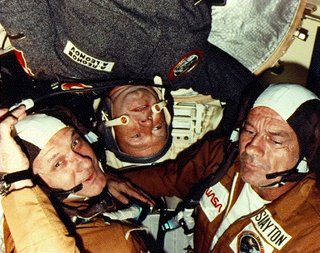
At the Air and Space Museum, located a few hundred feet from the war planes, there sits a replica of the Apollo-Soyuz mission. Back in the seventies, an Apollo spacecraft docked with a Russian Soyuz vessel in space. Once the docking procedure was complete, the astronauts floated into each other's ships and shook hands. Some historians say that the Apollo-Soyuz mission was a tremendous step forward in establishing good relations with the USSR. I would agree. Apollo-Soyuz represented two enemies coming together and enjoying one another's company. No threats, no weapons, no war---just a firm handshake and a smile.

I can only wish that we had more artifacts like this in my museum.
Nabokov, you genius!


I'm reading Vladimir Nabokov's Lolita and I was highly impressed by the first two paragraphs:

"Lolita, light of my life, fire of my loins. My sin, my soul. Lo-lee-ta: the tip of the tongue taking a trip of three steps down the palate to tap, at three, on the teeth. Lo. Lee. Ta.

She was Lo, plain Lo, in the morning, standing four feet ten in one sock. She was Lola in slacks. She was Dolly at school. She was Dolores on the dotted line. But in my arms she was always Lolita."

What an introduction!

Line by Line, Precept by Precept

My career as a mathematician was very brief. In the fourth grade, I was the fastest multiplier and divider that Stonegate Elementary had ever seen. Thanks to good ol' Kumon math, I was as fast as lightning. 7 x 7? 49. 8 x 2? 16. 10 x 10? 100. Yep, I was that good.

My career as a scientist was even shorter (meaning I never had one). Much to my parents' chagrin, I was always a dunce when it came to science. Newton's Laws of Motion were foreign concepts to me as well as the organization of the Periodic Table of Elements (halogen what?). Good Chinese children excel at biology and physics and grow up to become doctors and engineers. My father received his masters degree in chemical engineering at the University of Virginia, but for some reason my dad's genetic affinity towards math and science was never passed down to me or my siblings. (Sorry Mom and Dad, but you'll have to look to your grandkids to receive the Tung family's first M.D.)

As much as math and science perplex and boggle my mind, I find them to be fascinating subjects. Especially theoretical physics, which attempts to explain the inner-workings of the universe on both macro and micro levels. Multiple dimensions, parallel universes, warp theory---oh my!

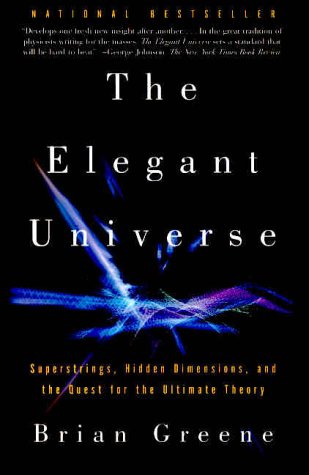
I'm currently reading Brian Greene's The Elegant Universe, which explains superstring theory (as well as quantum mechanics, special relativity, and general relativity) in layman's terms. The book truly is an exercise of my mind because these theories are so complex, even when they are dumbed down for dunces like me.

Our universe is a strange place, my friends, and the laws that govern it on a macro level differ from the laws that govern it on a micro level. Weird. And not only are there four dimensions in space, there possibly may be a fifth, a sixth, and even more. Weirder.

Reading The Elegant Universe has made me greatly appreciate the lives and works of Isaac Newton and Albert Einstein. In many ways, Newton and Einstein are the "prophets" of science. They shattered previous methods of thinking and replaced them with their own radical ideologies. They are the "enlightened ones" who provided answers to centuries-old dilemmas. Their ideas have affected technology, engineering, and astronomy as well as culture and philosophy. People like Sir Newton and Mr. Einstein only come around every few hundred years. Much like Jesus Christ, Mohammed, or Guru Nanak.

An interesting idea has been brewing in my head... In the scriptures we read that humans learn "line by line, precept by precept," meaning we learn a little bit at a time. We can't learn all the lessons we have to learn in a month or in a year. Instead, we learn a little here and we learn a little there, continually building up our well of knowledge and experience.

Thus it makes sense that the realm of science is dictated by this "line by line" methodology as well. Over six-thousand years ago when human civilization first emerged, our ancestors had only a rudimentary understanding of the world around them. Slowly, mathematics and the sciences developed. We grew to understand astronomy, biology, geology, chemistry, and physics. We mapped the constellations, developed measurements, discovered new species, and even harnessed nuclear energy. Our world today is a product of nearly 10,000 years of learning. And what's wonderful is that we will continue to better understand our world and our universe as time continues on---line by line, precept by precept.

OK. So if human understanding and science run on this line-by-line precept, then what about religion? What if, like physics, we are gaining a little knowledge here and a little knowledge there about the nature of god and the extent of his creations?

If this theory is correct, then religion cannot be static. It must be fluid---it must be willing to change and it must be willing to learn. When the human race was in its infancy, god revealed a small portion of his nature and his will to our ancestors. And now after centuries of progression, god continues to slowly teach us about his plan for mankind. Thus, to learn about god, we must learn about all faiths. If he has revealed a part of himself to the Jews and a part of himself to the Sikhs and a part of himself to the Zoroastrians, then we must look for him in these religions.

And if God indeed knows all things, then we must search for him beyond religion alone. We must study philosophy, art, science, history, literature, linguistics, mathematics---in short, everything. In D&C 93:53, God commands us to: "obtain a knowledge of history, and of countries, and of kingdoms, of laws of God and man, and all this for the salvation of Zion." The last portion of this verse is so interesting: all this for the salvation of Zion. In essence, we cannot progress if we refuse to learn. For learning is of God; and to learn is to be of Him.

God is far less mysterious then we are inclined to believe. (At least in my mind anyway.) If he loves us and is concerned about us, then surely we can find him. And with the wealth of religions and philosophies in this world, I know he is not very far.

So Cute I think I'm going to Explode


In the world of babies, there are cute babies and there are ugly ones. Ugly babies include the naked mole rat, the pufferfish, and the human newborn, which often looks red-faced and scrunched. Ugly babies make people cringe and cause a little bit of bile to rise in their mouths. Cute babies, on the other hand, make people melt and cause them to say "Oh! Can I hold it?"

Such is the case with baby harp seals, who are in my mind the cutest babies on Earth. Just look at them: soft snowy fur, little paws and tail, and those melt-your-heart black eyes. What's not to love? I just want to scoop one up in my arms and kiss it's furry little cheek.

One of the saddest things in the world is when cute little babies become orphaned. A few years ago I saw a documentary where a baby harp seal lost its mother to poachers. The little baby was distraught and it followed around the camera crew, crying for milk because it was so hungry. The camera crew couldn't do anything to help, however, because they didn't have anything to feed this poor little harp seal.

Thus the baby harp seal died! I think I cried and I tried to bargain with my TV. "I'll take care of the baby harp seal!" I said while banging on my television, "What do you need me to do? I'll move to Antartica."

Oh, baby harp seals. How I love you. If I could, I would adopt one of you.


You could live in my bathtub and in my backyard. I could buy you an igloo so you can stay cool in the summer months. Living with humans wouldn't be so bad: no need to catch food or worry about predators.

I think I would make a great harp seal mom.

The Trouble with Tribbles

I'll admit it: I love Star Trek. What can I say? I'm a total nerd---and I even work at the National Air and Space Museum to show for it.

Luckily for me, the curators I work with can totally empathize with my love of Star Trek. In fact, many of them are Trekkies (and Star Wars fans) themselves. And so, it makes perfect sense that we had a short lecture yesterday on Tribbles.


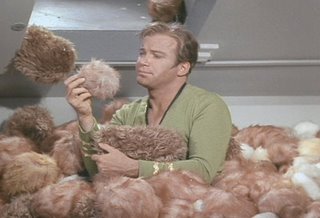
But what are Tribbles, you say? Tribbles, young grasshopper, are extraterrestrial creatures that resemble large hairballs. Despite their ugliness, they breed like rabbits---like extremely virile rabbits.

In an episode of the original Star Trek, the Enterprise becomes infested with Tribbles. The little critters breed and multiply, soon overtaking every nook and cranny of the ship. Although I'm not a big fan of the original Star Trek (Next Generation 4ever!), but I have seen this episode and find it quite amusing. I guess other people find it amusing too because the museum has five Tribbles in its collection.


Yesterday at noon, one of the curators was scheduled to give a brief lecture on Tribbles and how they represent the influence of science fiction in American culture. To spice up the lecture, the curator wanted to show some Tribbles to the audience. (Tribbles aren't real, of course. I think they're made out of plastic and hair. Very cute.)

Unfortunately for this curator, the museum has been in disarray for the past few days on account of the rain. The Tribbles are kept in museum collections, which is located 45 minutes from the Mall, and the curator wasn't sure if anyone from the collections department would be able to deliver the Tribbles in time.

Brief chaos ensued.

"WHAT HAPPENED TO THE TRIBBLES?" another curator asked.

"I can't reach anyone in collections because the phones are down," said the curator who was giving the lecture on Tribbles.

"I have a car. I can take you to get them. WE NEED THESE TRIBBLES."

"But it's already 10:30 and I don't know if we would make it back in time."

"No problem, I have a Delorian. You know, like on Back to the Future."

But behold the chaos passed when a fellow from collections walked into our department holding a blue box.

"THE TRIBBLES!" we all squealed.

"Oh, can I see them?" I cooed. (Yes, I was excited to see them too.)

"Can I hold one?" one of the interns asked. She seemed as excited as a Vulcan during mating season.


"Sure. But you have to wear gloves. THE TRIBBLES SHALL NOT BE TOUCHED."

"Yippee! I can't wait to call my mom!!!"

So I think this Tribbles affair proves my point that I am indeed a nerd and that the National Air and Space Museum is indeed a nerdy institution. To console myself, I find comfort in knowing that there are people in our world who are even nerdier than I am---interns.

The Rain that Just Won't Go Away


When I was little, I loved watching the Winnie the Pooh episode where a huge rainstorm descends upon the Hundred Acre Wood. In this video, the entire forest becomes a giant river, which causes the forest's inhabitants to scramble to safety. Pooh floats around in a honey pot with his head stuck in the pot's lip. Little Piglet is whisked away by the strong rapids and his friends rally to save him.

The past few days of my life have reminded me of this Winnie the Pooh episode. I haven't seen any yellow bears floating about, but I have seen lots of rain and lots of puddles. Driving is a nightmare because the rain pummels my car like a waterfall. Even walking can be dangerous. On my way to work on Monday, the traffic light at Independence Avenue was out. Independence is a busy street that is always loaded with morning commuters. The cars weren't slowing down to allow me to cross, so I had to step onto the street to take matters into my own hands. You just have to look drivers straight in the eye and then run like a maniac. It wasn't so bad. All of my limbs are still intact.

The museum where I work has taken a hard hit (but not as hard as the Natural History or American History museums. Or the IRS building for that matter, which is supposed to be closed for a month). Non-essential staff were let out early on Monday so we could head home before the traffic got worse. On Tuesday, we were told to stay home for the entire day. And then today, the power went out at 10:30AM and we were told that it wouldn't come back on for four hours. My boss was kind enough to let me go home and now here I am, sitting on my couch and enjoying the first bits of sunshine that have poked through the sky in four days.

The rain has wreacked havoc on many people in the DC area. Rivers are overflowing and homes are flooded. Luckily for my family, our house is dry and we have electricity. The rain is mostly a nuisance.

I have to admit though that I have thoroughly enjoyed the rain. I love rain and I love thunderstorms and I love overcast skies. My sister and I even did a rain dance on Sunday night. I wouldn't mind if it rained for another two weeks, but then again, that would inevitably lead to my house washing away like Piglet. (And of course, I don't want anymore people to lose their homes to flooding.) I suppose in my own perfect world it would rain everyday for a few hours but no house will ever get flooded. Ah, utopia.

In Praise of Sleep, Naps, and Down Comforters


If I was crowned the grand empress of the world, this would be my first decree: Stop what you're doing and take a nap.

That's right, go to sleep. Right now. I'll only excuse you if you are a doctor performing a life-saving surgery or if you are a pilot steering a mumbo-jumbo plane. Aside from circumstances like these, put your head down and start counting sheep. I don't care if you are in a meeting or eating fondue or spying on your neighbor. Go to bed.

There is a great shortage of sleep in the world and this makes me very unhappy. For instance, this morning I had to peel myself from my bed to get ready for work. I was in the midst of a wonderful dream when I was lurched awake by my dreaded cell-phone alarm clock. And now I'm at work---a little grumpy and a lot tired. All I want to do is lay down on my cubicle floor and take a nap.

I have always been a fan of sleep. In fact, my passion for sleep extends back to my birth. According to my father, I was still asleep when I came out of the womb. The doctor slapped my little butt, I let out a little wail, and then I shut my eyes and went back to sleep. Apparently taking a nap was more important than exploring my new surroundings.

Since my birth, I've always been one of those people who needs 8 or more hours of sleep per night. I can survive on 7 hours for a few days, but it becomes progressively harder for me to get up. This is why I never graduated from early-morning seminary. Class at 6:15AM? No thanks! Forget about temporal blessings---I'd rather sleep! This past October I even slept for a record-breaking 20 hours straight. It felt absolutely marvelous. Some people say excessive sleep is a waste of time. I say to these people: to hell with you!

What our world needs now is a little bit of love and a lot more of sleep. I am an adamant believer that more sleep can bring about world peace. Just think about it: War is noisy. War destroys clean sheets and soft beds. War prevents people from getting a good night of rest. Tired and grumpy people cause more war. It's a vicious cycle.

So why don't we sleep a little more? More sleep means more happiness. More happiness means more peace. More peace means...more sleep.

And this is why you should vote for me to become the Empress of the Earth, the great bringer of world sleep. I mean peace.

The Cup of Life!

When I was a sophomore in high school, I had a gargantuan crush on a boy named Joe Massie. He was a senior and he knew how to drive. He had corn-silk blonde hair and dashing blue eyes. He was God's gift to Winston Churchill High School and I was a devoted worshipper.

Joe was also captain of the soccer team, which prompted me to attend as many soccer games as possible. I could stare at him for ninety minutes straight, allowing me to drink in this 17 year-old Adonis unabashedly. And when he wasn't on the field, I could stare at the other handsome players on the team, like school heart-throb Josh Hughes (tall, lean, and dreamy).

I soon noticed that soccer was much more fun to watch than high school football. First, Churchill football was horrendous. During my junior year, we only won one game and we only won because the school we beat didn't have a senior class. The soccer team, on the other hand, went to the state championship every year---and we all know it's much more entertaining to be winning than losing. Second, high school football games often stretched three or four hours and you had to spend this entire time sitting out in the cold. Soccer games, however, only lasted two hours at most, thus preventing fans from turning into ice cubes. And third, soccer boys were hot. Joe Massie and Josh Hughes were only the tip of the iceberg---the entire Churchill soccer team was smokin'!

Now that the World Cup is here again, I have become permanently attached to the TV and ESPN.com. I love soccer. I watch it at home and I read about it at work. I love cheering for the underdogs (Trinidad & Tobago, the U.S.) as well as the powerhouses (England). If only I was paid to watch the World Cup, then the world would be a perfect place.

I'd probably watch the World Cup even if it was played by hairy trolls. But luckily for me, the players aren't hairy trolls in the least---they're more like GQ models. Take for instance, Carlos Bocanegra of the U.S. Forget about Dr. McDreamy on "Grey's Anatomy." Bocanegra forever! And I can't fail to mention the entire Australian national team because all of them are oh-so-cute. I've always dreamt of marrying an Australian soccer player and watching them on the telly only makes me want to fulfill this goal even more.

Viva la copa de vida!

A Moment of Clarity


I'm the kind of person who likes to listen to her favorite songs over and over and over again. In the sixth grade, I bought All-4-One's new disc and listened to "I Swear" on repeat. During my last year of college, my drug of choice was The Format's "The First Single." And for the past few weeks, I've listened to Snow Patrol's "It's Beginning to Get to Me" incessantly. It's repetitively catchy and purely addictive. I love it.

The song is about a relationship on the rocks. What started out as a beautiful relationship has turned into something cold and fractured. My favorite line comes near the end of the song, when the singer reaches out to his girlfriend: "I tried to tell you before I left/ But I was screaming under my breath/ You are the only thing that makes sense/ Just ignore all this present tense." I love the third line: "You are the only thing that makes sense." For me, this is the climax of the song. Everything else is a crescendo or diminuendo from this point.

While I was driving around town this weekend and listening to this song on repeat, I realized why I like this line so much: I want to be the only thing that makes sense to someone. I want to be the rock in a relationship. I want someone to need me.

And then like a flash of lightning, I had a moment of clarity. The past nine months suddenly made more sense. I finally understood why my heartache and sadness have lasted for so long. I finally realized why it has taken me so long to recover from a relationship that started to crumble last October.

Scott and I were a mismatch from the start. He was fifteen years older than I was and had never finished college. In his twenties, he was in a rock band and spent ten years drinking, carousing, and womanizing. Our values were completely different and we could never talk about religion without arguing.

But like they say, opposites attract. Scott and I were very different people, but we had a lot of chemistry. I had never met someone who was so much fun and who could regale me with so many amazing stories. And I had never met someone who looked at me the way he did---like I was the most wonderful and beautiful human being he had ever seen. He wanted to spend every minute with me and I was only happy to oblige.

Red flags flashed all over my eyes, but I ignored them because he needed me---and because of this I grew to need him too. All that mattered in my life was that Scott needed and wanted me. Out of all the women in the world, he wanted me and only me.

And I suppose this is why it has taken me so long to recover from our break-up. Scott didn’t need me anymore. Not even a little bit. In fact, he moved down to Mississippi when a job opportunity came his way. I felt like he ripped out my heart and shredded it on a cheese grater. And then he left.

But I’m finally, finally, finally moving on with my life. No more tears and no more angry rants. Only a little bit of sadness and slowly, acceptance. I’ve emerged from the relationship more mature and more insightful. I’ve learned a lot about myself---and especially how I yearn to be needed. I want my family to need me, I want my friends to need me, and I want any future Scotts to need me too.

I like being the rock in a relationship. I like feeling strong and sturdy and responsible. I’m a natural protector and guardian so I don’t feel entirely whole when I don’t feel needed.

So I look forward to playing my dutiful role as the rock. When it comes to relationships, I’m not necessarily looking for a patch of grass to protect or a delicate flower to shelter. Instead, I’m searching for another rock to lean up against---someone who is strong and sturdy, but incomplete without a companion stone.

A rock is a rock is a rock, but two rocks---that makes all the difference.

My Apologies to Future BYU Students

During my first two years at BYU, I subsisted upon the social benefits of university life. College was a time to meet new people, flirt with boys, sit in hot tubs, and play all night. I slept-in every day and maxed-out my Dining Plus card. My classes took a backseat to my awesomely-fun social life.

During my third year in college, I started to focus more on my studies. I threw myself into my books and into my homework, often staying late at the library until midnight and rolling into bed at 1AM. But my newfound work ethic was more mechanistic than passionate---I studied hard to achieve good grades and praise, not to develop my mind or even to gain a deeper understanding of history. My classes definitely made me work, but didn't necessarily make me think.

After my junior year, I decided to stay in Provo for half the summer. My history classes were usually demanding so I decided to take one history course in spring semester, thus focusing on one class for ten weeks. When I scrolled through the spring semester course offerings, one class stood up in particular: History 340, 20th Century Chinese History. I was intrigued. I had never taken any Chinese history classes, much less any contemporary history classes.

For my first two years at BYU, I had prided myself as an ancient historian---learning about the bas reliefs of Assyria and the aqueducts of Rome. But I had no tangible ties to Assyria or Rome, only a vague interest towards antiquity. Contemporary Chinese history, on the other hand, offered me an in-depth view into my heritage and ancestry. My grandparents fled China in the late 1940s to escape the Communists. When I was little, my grandmother filled my head with stories about the dreaded CCP. It was an easy decision to make---I signed up for History 340.

On the first day of class, Dr. Michael Murdock used a slideshow to introduce the class to modern China. He showed us pictures of the green countryside juxtaposed against the gray-skies of Beijing. He showed us a land full of contradictions---tradition and modernism, communism and capitalism, secrecy and over-exposure, isolation and community. I knew this history class was going to be different, and not only because of my cultural descent. Our first assignment was to send an email to Dr. Murdock and to tell him about why we took his class, why we studied history, our historical interests, and what we wanted to do with our lives. I didn't even know this professor, but he seemed to have a deep interest in me.

As the spring semester continued, I saw further proof that History 340 was unlike any other class I had ever taken. We regularly watched movies that tackled aspects of modern Chinese history, like "To Live," and "Red Sorghum." We read autobiographies by people who lived through the events we were studying, like The Private Life of Chairman Mao and Red China Blues. And in class, we were readily encouraged to ask questions and to engage in discussion.

Dr. Murdock's approach to teaching history was simple. He didn't want his students to leave his class with only the ability to regurgitate names and dates. He wanted to equip his students with the ability to think and to re-think history. Our term papers revolved around questions like, "How are nationalism and imperialism linked in the creation of modern China?" and "How do individual identity and communal identity clash in 20th century China?" He used the study of modern Chinese history as a vehicle to gain greater understanding of the world around us.

One of the requirements of the course was to meet with Dr. Murdock on a one-on-one basis to discuss our term paper. So after class one day, I knocked on the professor's door expecting a brisk meeting. Instead, Dr. Murdock talked to me for half-an-hour, asking me about my historical interests and inquiring about my Chinese ancestry. Throughout my tenure at BYU, Dr. Murdock always made time to talk with me, whether it was about history, about grad school, or about my struggles over my faith. His door was always open and he always greeted me with a smile.

And so, when I found out last week that Professor Murdock didn't receive tenure, I felt very sad. Mostly, I felt sadness for future BYU students who won't have the pleasure of taking a class with Dr. Murdock. They will miss out on the chance to become real historians, rather than regurgitators of cold facts.

Professors who truly care about students are already few and far between. Professors who learn every name of their students are even rarer. It's disappointing to me that professors often have to choose between research interests and student interests. At a big teaching university like BYU, professors often have to teach three classes per semester as well as crank out articles and books. Many professors fail to form any close bonds with their students because they're too busy trying to publish. And I can't blame them. I can't blame someone for trying to keep their job.

But I wish professors like Dr. Murdock didn't have to suffer the cruel consequences of the "publish or perish" methodology. He took an honest interest in his students and I feel he's being punished for it. In the end, I think everyone loses---Dr. Murdock, the university, and especially, the students.

Witch-Hunts or Globalization? That is the Question...


After a year-long stint away from school, the time has arrived again to sign-up for classes! Last week, I received a package in the mail from LSE, which outlined my class offerings for my MA. I need to take three classes and I've chosen two thus far:

1.) Presidents, Public Opinion, and Foreign Policy: From Roosevelt to Reagan, 1933-1989

This class intrigues me because I really love 20th century American history and I want to learn about U.S. history from an international perspective. The course also provides an in-depth look on how public opinion has shaped domestic and foreign policy, especially during the Korean and Vietnam Wars.

2.) Sex, Race, and Slavery: The Western Experience

Sounds steamy! Haha, just kidding. I'm a cultural and societal historian at my core so this class definitely sounds intriguing.

3.) ???

I was disappointed to discover that my third-choice class would not be offered in the 2006-2007 academic year (Cultural Encounters from the Renaissance to the Modern World). Oh well. You can't have everything right?

Here are some of my options:

1.) Race, Violence, and Colonial Rule in Africa, taught by Dr Joanna Lewis

Sounds fascinating because I'm interested in African history, but I lack a historical background in it. The only problem? I don't know if I have enough interest in African history. I would love to attend a few seminars on it, but I don't know if I want to take an entire class of it.

2.) Persecution in Europe: From Witch-Hunts to Ethnic Cleansing, taught by Dr Mia Rodriguez-Salgado

The title of the class sounded promising, but it was the class description that got me hooked: "The course is ambitious and conceptually challenging, and requires that students both enter and yet distance themselves from other mentalities in order to understand persecution in Europe across the centuries."

I'm not a European history buff, but I might make an exception for this course.

3.) Empire, Colonialism, and Globalization, taught by Dr Joya Chatterji

Sounds bland, but this course would give me a broad understanding of empires and their impact on the modern world. This course appeals to me especially because its lectures will be given by faculty members in both the International History and Government departments.

Additionally, this class seems to be discussion-oriented; many of the lectures will include student projects.

4.) Warfare, Religion, and National Identity, taught by Dr John Hutchinson (photo unavailable)

After I read Imagined Communities, I love learning about national identity. And religion. And warfare sounds interesting, too.

(I think I might be leaning towards #3 and #4.)

So...what to choose, or what not to choose? That is the question. Any advice?

Zoinks! Yikes! Egads!

I've come up with a new word.

But "word" might be too strong of a word.

I've come up with a new sound then: BLARGH.

I like to say "blargh" when I am frustrated. When it rains in DC and I am sans umbrella, I like to utter a "blargh" under my breath. When I realize I left my cell phone at work, I like to say "blaaaargh." And when I realize I've walked around all day with my fly open, I like to yell, "BLAAAAARGH!"

It's a great sound. Or word. Whatever. It sounds like something they'd say on Scooby Doo.

The War at Home


"America is particularly prone to battles over culture." ("How to lose the culture wars," Lexington, The Economist, 1 June 2006.)

Compared to its European cousins, America is the lone prude of the family. While France, Denmark, and Germany barely blink an eye when it comes to abortion and gay marriage, the U.S. is torn asunder by these culture wars.

Such wars are understandable because the U.S. is a devout nation. Many of her citizens pray every day and attend church regularly. Issues like abortion and gay marriage cut deep into the American heart because they are entwined with morality---the sanctity of life and the sanctity of marriage. When this sanctity is defiled, religious Americans rise up to defend their values.

This week in Washington, the Federal Marriage Amendment (FMA) will be introduced on the Senate floor. If the amendment is passed, the Constitution will define marriage as a union between a man and a woman, thus putting to rest any clamors for gay marriage.

Although the U.S. is a secular nation, it is nearly impossible to remove religious overtones from the debate on gay marriage. Supporters of the FMA consist of conservative religious groups, like Roman Catholics, Orthodox Jews, Southern Baptists, and Mormons, who view homosexuality as a sin. Marriage is a sacred union blessed by God between one man and one woman---Adam and Eve are the perfect archetype. Gay marriage is thus rejected because it deviates from God's will.

Supporters of gay marriage, however, view the FMA as prejudiced and persecuting. They contend that if two people love one another and want to make a commitment to each other, then the government should sanction such a union. Marriage should no longer be reserved for heterosexual couples; the idea of "one man, one woman" is out-dated and exclusionary.

So yet another culture war embroils our country---how do we define marriage? Do we define it as a union between a man and a woman or between two consenting adults? How do we choose between a religious definition or a secular one?

To me, the most interesting part of this debate is not the morality of gay marriage, but the legality of it. In my opinion, marriage is not an inalienable right. The right to marriage cannot be equated to the right of life, liberty, and the pursuit of happiness. Laws are needed to regulate it: siblings should not marry siblings, five year-old girls should not marry five year-old boys, and one man should not have thirteen wives. I think most Americans would agree with regulations like these that bar incestual, premature, and polygamous marriages. The issue of homosexual marriage, however, is much more controversial...

In my view, I define marriage as a legally-recognized union between one man and one woman. (Boo polygamy.) I don't view marriage as a malleable institution whose definition changes from one century to the next. However, I do support civil unions and I believe gay couples should enjoy shared health benefits and other spousal privileges of the like.

That said, I do not support the FMA because the regulation of marriage is a power granted to individual states. A writer from the Economist brings up a good point: "[The Republicans] are trying to inject the federal government into an issue that has traditionally been decided by state governments." Individual states have already done a good job in regulating marriage laws. The 1996 Defence of Marriage Act even guarantees that a state does not have to acknowledge a gay marriage sanctioned in another state. So I say: let's leave this issue for the states to decide.

Furthermore, I am wary of constitutional amendments. The Constitution exudes a secular type of holiness---it is America's Bible and we cannot make changes to it willy-nilly. Since 1789, over 10,000 amendments have been introduced to Congress but only 27 have been ratified. Amending the Constitution is a serious business and the utmost discretion should be exercised in ratification. And the last thing we want is another Prohibition episode when the 18th amendment (that prohibited the manufactoring, importing, and exporting of alcohol) was repealed fourteen years later by the 21st amendment.

Amendments to the Constitution are necessary, but like salt, should be used sparingly. Although I view marriage as a sacred and holy act, I am unsure of the federal government placing regulations on a traditionally state-held power.

Benji's Back!

About a month ago I posted a link to a Chinese music video starring a bonafide BYU Young Ambassador. Benji, as he calls himself, has now finished up his degree and is moving to China to launch his career as a "American Chinese pop Supa-star"! Yippee!

Benji's music video can be described in one word: CHEESE. It reeks of cheesiness: silly hip-hop dance movies, backdrops of Provo, and an Asian love interest. I giggled non-stop when I first watched it, thinking "Are you serious?" But indeed, Benji is very serious. And after I checked out his MySpace profile, over 1000 people find him to be very serious, too. I really think he's going to make it big in China. Benji is even negotiating with CCTV (Chinese Central Televsion) about hosting a show in China and he also received interest from MTV China to air his music video.

Hold the phone. (Haha. When's the last time you used that phrase?) I need to contact the Chinese people, stat. I need to bring to their attention a little something I call taste. I need to warn them about the Benji invasion. Run away, my cousins! Turn off your Communist-sponsored radios and television sets! Run away before Benji makes you turn into a squealing puddle of goo!

But my cries will fall on deaf ears because Chinese people eat this stuff up. They love cheesiness and they love Americans who embody cheese. Why? I don't know, but I do know my parents love to sing really loudly to strange Chinese karoake. Even my own family loves cheese.

It frightens me to no end that I could have been a screaming Benji fan if my grandparents had stayed in China rather than flee from the Communists. What would my life be like if I had grown up in Shanghai?

Would I look like this?

And make vertical peace signs when I pose for pictures?

And take pictures of myself with my web cam like this?


Would I have a neo-mullet and dye my hair red? Would I giggle incessantly and cover my mouth with my delicate hand? Would I wear shirts that read "Super Gas" across my chest? (True story, I saw a girl with a shirt like this in Beijing.) Would I have a Hello Kitty keychain and own an exhorbitant amount of stickers?

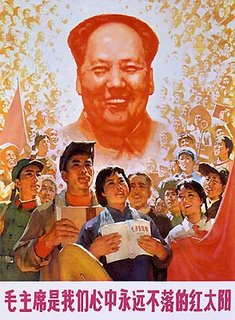
BLARGH! I'm getting the heebie-jeebies. Excuse me while I rock back and forth, chanting "I don't like Pokemon, I don't like Mao, and I don't like neo-mullets."

Line by Line, Precept by Precept

My career as a mathematician was very brief. In the fourth grade, I was the fastest multiplier and divider that Stonegate Elementary had ever seen. Thanks to good ol' Kumon math, I was as fast as lightning. 7 x 7? 49. 8 x 2? 16. 10 x 10? 100. Yep, I was that good.

My career as a scientist was even shorter (meaning I never had one). Much to my parents' chagrin, I was always a dunce when it came to science. Newton's Laws of Motion were foreign concepts to me as well as the organization of the Periodic Table of Elements (halogen what?). Good Chinese children excel at biology and physics and grow up to become doctors and engineers. My father received his masters degree in chemical engineering at the University of Virginia, but for some reason my dad's genetic affinity towards math and science was never passed down to me or my siblings. (Sorry Mom and Dad, but you'll have to look to your grandkids to receive the Tung family's first M.D.)

As much as math and science perplex and boggle my mind, I find them to be fascinating subjects. Especially theoretical physics, which attempts to explain the inner-workings of the universe on both macro and micro levels. Multiple dimensions, parallel universes, warp theory---oh my!

I'm currently reading Brian Greene's The Elegant Universe, which explains superstring theory (as well as quantum mechanics, special relativity, and general relativity) in layman's terms. The book truly is an exercise of my mind because these theories are so complex, even when they are dumbed down for dunces like me. Our universe is a strange place, my friends, and the laws that govern it on a macro level differ from the laws that govern it on a micro level. Weird. And not only are there four dimensions in space, there possibly may be a fifth, a sixth, and even more. Weirder.

Reading The Elegant Universe has made me greatly appreciate the lives and works of Isaac Newton and Albert Einstein. In many ways, Newton and Einstein are the "prophets" of science. They shattered previous methods of thinking and replaced them with their own radical ideologies. They are the "enlightened ones" who provided answers to centuries-old dilemmas. Their ideas have affected technology, engineering, and astronomy as well as culture and philosophy.

Of course, there are hundreds of scientists and mathematicians who have influenced the work of Newton and Einstein and these people cannot be ignored. Indeed, Newton and Einstein could not have rocked the world of physics without the discoveries of their predecessors. Every contribution, every discovery allowed for Newton and Einstein to change the world. But men like Sir Newton and Mr. Einstein only come around every few hundred years. Much like Jesus Christ, Mohammed, or Guru Nanak.

An interesting idea has been brewing in my head... In the scriptures we read that humans learn "line by line, precept by precept," meaning we learn a little bit at a time. We can't learn all the lessons we have to learn in a month or in a year. Instead, we learn a little here and we learn a little there, continually building up our well of knowledge and experience.

Thus it makes sense that the realm of science is dictated by this "line by line" methodology as well. Over six-thousand years ago when human civilization first emerged, our ancestors had only a rudimentary understanding of the world around them. Slowly, mathematics and the sciences developed. We grew to understand astronomy, biology, geology, chemistry, and physics. We mapped the constellations, developed measurements, discovered new species, and even harnessed nuclear energy. Our world today is a product of nearly 10,000 years of learning. And what's wonderful is that we will continue to better understand our world and our universe as time continues on---line by line, precept by precept.

OK. So if human understanding and science run on this line-by-line precept, then what about religion? What if, like physics, we are gaining a little knowledge here and a little knowledge there about the nature of god and the extent of his creations?

If this theory is correct, then religion cannot be static. It must be fluid---it must be willing to change and it must be willing to learn. When the human race was in its infancy, god revealed a small portion of his nature and his will to our ancestors. And now after centuries of progression, god continues to slowly teach us about his plan for mankind. Thus, to learn about god, we must learn about all faiths. If he has revealed a part of himself to the Jews and a part of himself to the Sikhs and a part of himself to the Zoroastrians, then we must look for him in these religions.

And if God indeed knows all things, then we must search for him beyond religion alone. We must study philosophy, art, science, history, literature, linguistics, mathematics---in short, everything. In D&C 93:53, God commands us to: "obtain a knowledge of history, and of countries, and of kingdoms, of laws of God and man, and all this for the salvation of Zion." The last portion of this verse is so interesting: all this for the salvation of Zion. In essence, we cannot progress if we refuse to learn. For learning is of God; and to learn is to be of Him.

God is far less mysterious then we are inclined to believe. (At least in my mind anyway.) If he loves us and is concerned about us, then surely we can find him. And with the wealth of religions and philosophies in this world, I know he is not very far.

Whatever Happened to...

1.) Tevin Campbell?

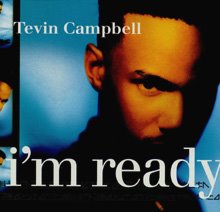
When I was a sixth grader at White Oak Middle School, Tevin Campbell was the coolest R&B artist. (Although he could never touch the status of Ace of Base.) Tevin was the baby-faced crooner of hits like "I'm Ready" and "Can We Talk." His entire CD was really good and it produced single after single.

So what ever happened to Tevin Campbell? I think he lent his voice to the song "Stand Out" in "A Goofy Movie," but other than that, I haven't heard from him since.

2.) Whitney Houston?

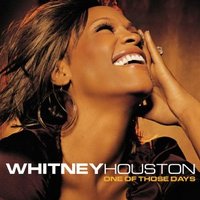
What happened to the lovable and cute Whitney of "I Want to Dance with Somebody" fame? Or the powerhouse singer of "I Will Always Love You"?

Drugs is what happened! And Bobby Brown!

But come back to us, Whitney. Please, come back. Ditch the white powder and your washed-up husband. Pull a Mariah and conquer the airwaves once again!


3.) The cast of the Babysitter's Club?

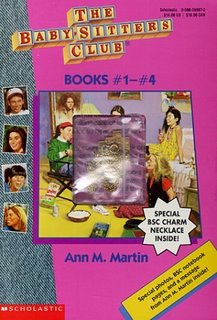
Some kids collect baseball cards. Other kids collect Pogs. I collected Babysitter's Club books. Why? Because they were awesome! I especially loved the Super Specials; my favorite being the one where the girls join their school's cast of "Peter Pan." Stacey and Sam (Kristy's older brother) were cast as Mr. and Mrs. Darling---and they were dating to boot! *Sigh* My ten year-old heart yearned for such romance.

So what happened to the Babysitter's Club? Did they live forever as eighth graders at Stoneybrook Middle School? Or did they eventually attend high school and college? Did Marianne and Logan ever get back together?

Tell me, Ann Martin, what happened to these girls!

4.) Crystal Pepsi?

I thought Crystal Pepsi tasted good. And it fooled your senses because it looked like Sprite but tasted like cola. Ingenious! Crystal Pepsi was extremely popular at my elementary school. Like MC Hammer and Vanilla Ice, it was tre cool.


5.) Those delicious cookies that I don't remember the name of?

Yum...I'm drooling just thinking about them. They were mini chocolate-chip cookies that were filled with chocolate cream. They came in a box and they were available at any grocery store.

They still haunt my dreams, taunting me because they will always be out of reach---just like that guy in Greek mythology who is perpetually thirsty. He is surrounded by water, but every time he bends down to drink, the water recedes and eludes him. How cruel! Those Greek gods sure knew the meaning of punishment. (Am I being similarly punished by the Keebler Elves who have decided to discontinue making this delicious cookie in their cookie-making tree?)

Oui, Oui?

Last night, my roommate Tracy told me that France has changed its laws concerning naturalization. The government recently passed a law that requires applicants of French citizenship to speak French fluently. My roommates supported this change and then the topic was brought up about making English the national language in the U.S.

So I wondered: is it a good idea to make English the national language in our country?

Perhaps in some ways. Although the creation of a nation is regulated by a constitution and subsequent laws, the creation of nationalism is much more complex. Nationalism exists when the citizens of a country share a common history, a common dream, and numerous common traits. Indeed, Americans are a patriotic people because they share these three things. We look up to George Washington and Thomas Jefferson as our Founding Fathers; we dream about owning a home and pursuing an education; and despite our racial and ethnic differences, we all share much in common. We are generally religious and optimistic---and we all (most of us, anyway) speak English.

Our common language brings us together. We can converse freely with our neighbors and at the grocery store. We watch TV and movies that are broadcasted in a language we understand. And we send our children to schools where all classes are taught in English. Our language (and even our accent) is a way to feel part of a group. If you don't know English, then you're going to have a hard time fitting in.

Thus requiring a basic command of English could actually be a benefit to immigrants. To succeed in America, they have to be able to communicate with the rest of us. It is also essential to have a good command of English if they want to attend college here. Necessitating English-speaking skills as a precursor to citizenship could help immigrants find better jobs and obtain a higher education.


But this subject still makes me feel wary. For one, I don't think it's really necessary to make English our national language. We are all descended from immigrants, many of whom came to this country with absolutely no command of the English language. Yet they settled down, obtained jobs, and learned English. Granted, I'm sure there are some people who never gain fluency, but their children and grandchildren all grow up speaking perfect English. Why? Because second-generation citizens want to fit-in. Case in point, my parents spoke to me in Chinese a lot when I was little, but I learned English because I wanted to fit-in at school. (Speaking Chinese to white Americans doesn't make a girl a lot of friends!)

And isn't the nationalization of English a bit extreme? Perhaps even a little elitist? The U.S. has a lot of roots with Spanish-speaking peoples too. Would it be more fair to make English and Spanish our national languages?

Anyway, I guess there really are two issues at hand here: 1.) making English the national language and 2.) requiring immigrants to speak fluent English if they want citizenship. I don't think number one is necessary and I think number two is necessary only to an extent.

Am I being too lenient? Am I missing a bigger piece of the picture? Let me know your thoughts.

Ligers, Tigons, and Zonkeys, Oh My!

For some unknown reason, I stayed up late last night looking at pictures of animal hybrids. At 11:30PM I had watched a segment on the Colbert Report concerning a grizzly/polar bear hybrid that had been killed by a hunter. Intrigued, I went online to discover more of these "freak of nature" creatures. (What can I say? I'm a total nerd!)

Thank my lucky stars, I found an entire
site dedicated to animal hybrids! What I found most amusing was the names given to these forlorn-looking creatures: Zorse, Jaglion, Pumapard, Dogote. My favorite was beefalo. That just made me laugh, laugh, laugh. Beefalo!

Here are a few of the stranger-looking ones:


Zony --- Shetland Pony/Zebra Hybrid

Wolphin --- Whale/Dolphin Hybrid

Liger --- Lion/Tiger Hybrid (Considered the largest cats in the world)

Okapi --- Deer/Zebra Hybrid

OK, I'm just kidding about the last one. Okapis are actually forest giraffes (and the only living relative of the giraffe). Aren't they so cool-looking? And they only need five minutes of sleep per day!

Here's another interesting factoid: sheep and goat hybrids are called "geep" or, get this, the "toast of Botswana." Huh?

Anyway, I'm done being geeky. For crying out loud, I work at a space museum! Can I get any dorkier? Maybe if I start attending Star Trek conventions...

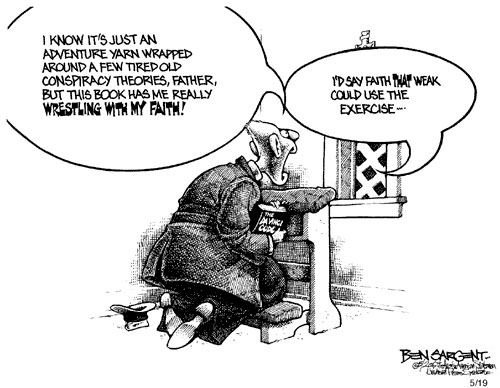
The Da Vinci Manifesto

Dear Dan Brown,

I have said it before and I will say it again: "You are a genius, my brother!"

I thought Angels and Demons was good, but you truly saved the best for The Da Vinci Code. Who would have thought that an albino monk would make such a vile villain? Who would have thought that a Harvard symbologist would be such a perfect protaganist? And to top it all off, who would have thought that the passive voice could be used so frequently in one novel? Certainly not me or Toni Morrison for that matter. Sure, Beloved topped the New York Times' booklist for the best American novel published in the past 25 years, but Toni is no Dan Brown. (A fact that makes her green with envy, I'm sure.)

And so, let me be the first to say that I am absolutely appalled that The Da Vinci Code was not nominated on the list. If it makes you feel better, the film version of Beloved earned $23 million in the box office while the film version of Da Vinci scored over $85 mil in the opening weekend alone. If I was you, I would contact the judges who compiled the list and ask them to reconsider. They need to realize that they have made a gross error in overlooking your magnum opus. Cases in point:

1.) The Re-telling of History Factor. Thank you for giving Catholics, and all Christians for that matter, a good thrashing. It's silly for them to believe in the divinity of Christ because that is so, like, 4th century. Honestly, Christians should look to you as a modern-day Martin Luther. (Except you use your book for financial gain.)

And bravo on your research concerning the Roman Empire and the early stages of Christianity. I liked how you purposely ignored Constantine's converstion and instead focused on his baptism. It's so good of you to pick and choose historical dates and events to weave your own version of history. That makes it easier on your readers, many of whom are ignorant of Roman history and thus rely on your novel to tutor them.

Concerning the supposed tension between Christians and pagans, oh Dan, you rascally devil! You entirely fabricated a war between these two groups to strengthen your argument in Da Vinci. What a sly one! Little do your readers know that no wars existed between Christians and pagans in the decades preceding Constantine's rule. In fact, it was the other way around. Pagan emperors like Caracalla and Diocletian were the ones doing the persecuting. But I'm sure that is something you just overlooked. After all, you are not a "real historian," meaning you don't have a PhD. Those academics are so stuffy and elitist anyway! Who needs them and their carefully-researched monographs?

2.) The Novel-as-a-Movie-Script Factor. For decades, movie-makers have struggled to transform books into movie scripts. It's a long and hard process and one that is fraught with failure. More often than not, excellent books are butchered when they are translated onto the big screen. (Possession, anyone?)


But you do a kind favor, Dan, when you write your novels like a movie manuscript. The short chapters in Da Vinci mimic the quick scene changes in a thriller and the dialogue in the book is so predictable and cheesy that it practically wrote itself into movie form. And don't get me started on the two-dimensional characters who are so easily translated into standard movie archetypes: Robert Langdon as the intelligent protagonist, Sophie Neveu as the pretty French ingenue, Silas as the freakish henchman with a lot of emotional baggage, and Sir Teabing as the innocent friend-turned villain (didn't see that one coming).

You cut out the middle-man, Dan! Screenwriters will be out of a job soon if you keep churning out books like this. And Da Vinci has changed the novel as a genre. No longer will novels be judged by their artistic merit, but by their earning potential in Hollywood. What a relief! I can't wait for the blessed day when books will become obsolete. Thank you, Mr. Brown, for taking us a step further to this goal.

3.) The French Factor. Sexy Sophie Neveu, played by the doe-eyed Audrey Tatou in the film, reminds Americans that the French actually do have something to offer other than croissants and berets. The French may be snotty scalawags when it comes to international politics, but they sure have some pretty dames. And not only are French women beautiful and sophisticated, they also happen to be living descendants of Jesus Christ.

Americans who hate the French now must own up to the fact that they have something we don't---Jesus babies. If the Da Vinci movie can't build bridges between the U.S. and France, then I don't know what will. But I have faith in Dan Brown and his limitless powers of persuasion.

So there you have it: three excellent reasons why The Da Vinci Code trumps any other work of American fiction in the last 25 years.

Of course, there are some literary critics who would decry the compilation of such a list. Since the 1950s, some critics have questioned whether or not the novel is dead. Your book, Mr. Brown, finally proves that, yes indeed, the novel has sputtered, crawled into a hole, and died.

But is this necesssarily a bad thing? In your eyes, I'm sure it isn't.

Sincerely,
A Fan


Viva Las Vegas!

What a fabulous weekend! My best friend Alexis got married to a wonderful guy named Gabe Middleton. They complement each other so well and he treats her like gold. The entire weekend was full of happiness and fun. If Vegas wasn't so damn hot, I could have stayed there forever!

One of the best parts of the trip was seeing my friend Kristen. We met in London back in 2003 and we were roommates for three semesters afterwards. In August, I attended her wedding in California where Alexis and I were her bridesmaids. Now Kristen's married to a great guy named Jason and they're moving to Portland in June.

It was also great to see Alexis's sister, Alyson. (We kept each other company on the temple grounds when Lex and Gabe were getting sealed.) She's moving to DC in a few weeks to intern at the National Postal Museum. Don't be sad, Aly. Stamps are cool!

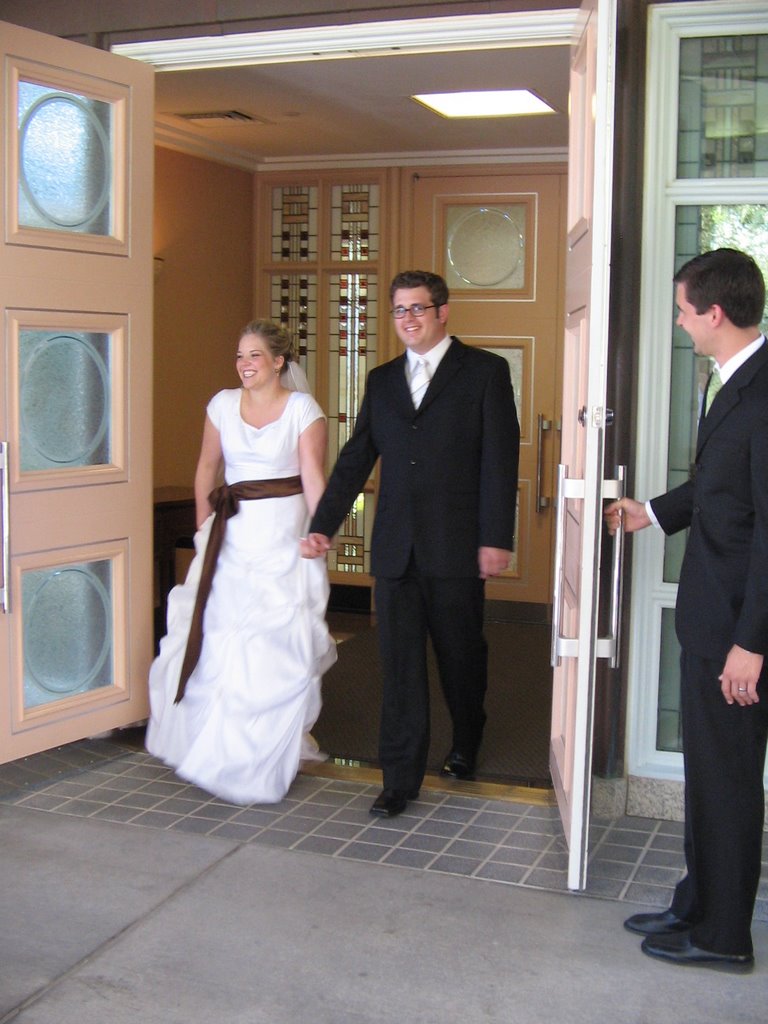
The happy couple emerges!

Gabe and Alexis met at---where else?---BYU. They were in the same ward at the Colony and started dating in January 2005. (Alexis likes to add that they were friends since September 2004.) As far as BYU dating goes, Lex and Gabe dated for a long time---a total of eleven months before they got engaged. Their engagement lasted six months so they've been dating for a year and a half before they got hitched. Yay for not rushing into marriage!

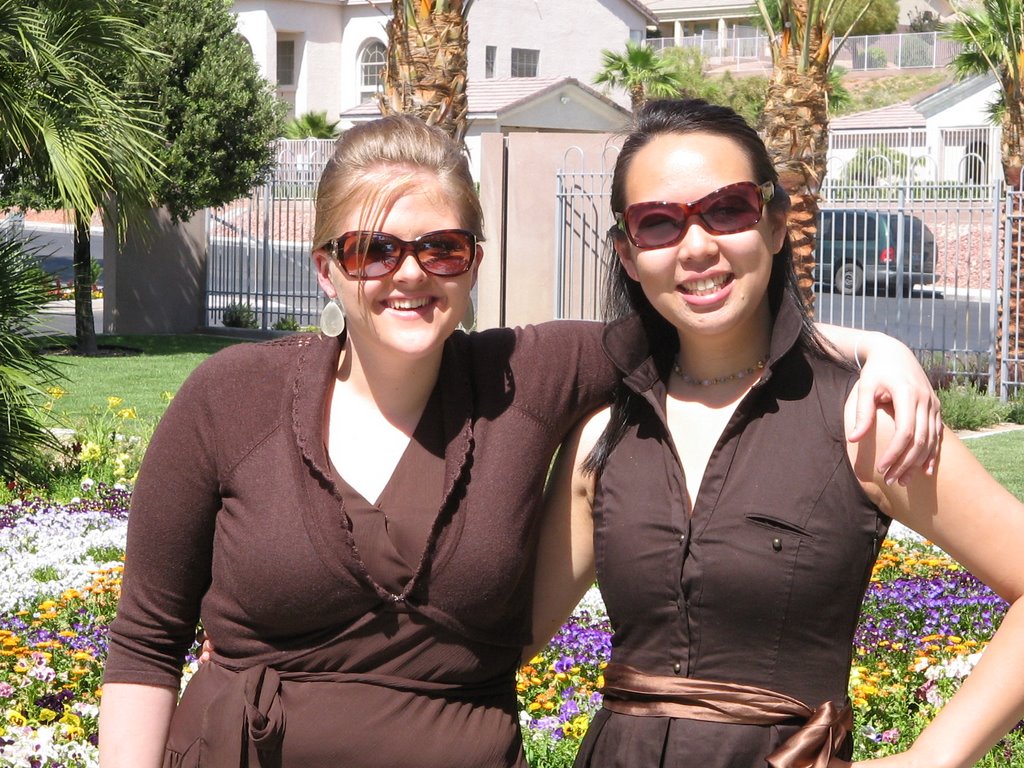
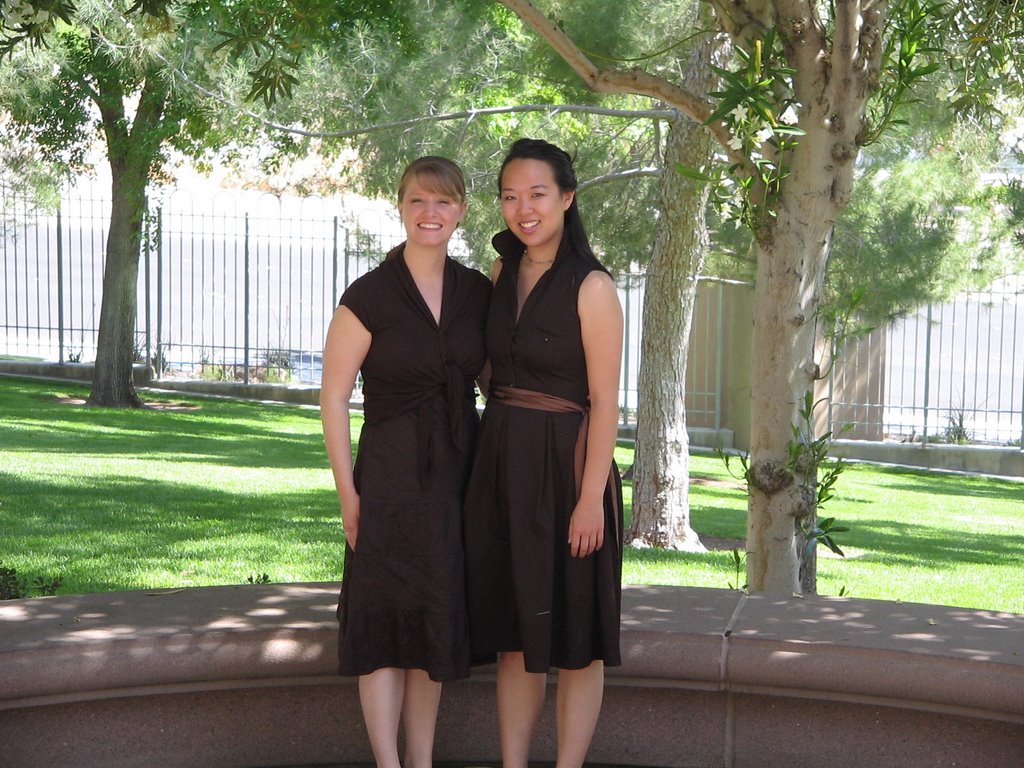
Alexis had eight bridesmaids---her two sisters, three friends from high school, and three friends from BYU. Since her bridesmaids were scattered across the U.S., Lex had us choose our own bridesmaid dresses (our only job was to make sure it was brown). I was a bit worried that our dresses would clash, but everything turned out so well. All of us bought dresses in the same hue of brown and in the same length. I loved my dress! I got it at Zara and it has a retro look to it. The only negative side? It was too tight on my arms. Ouch. What can I say? I have chubby arms.

My favorite part of my outfit was my bouquet! Alexis's colors were green and brown so her bridesmaids wore brown and carried green bouquets. I think her florist did a terrific job.

Aside from Aly's lovely face, please draw your attention to the temperature on the rearview mirror. 107 degrees!!!

What's Vegas without a little gambling? On Sunday, Jason, Kristen, and I went to a brunch buffet at the Rio. (We wanted to go to the Wynn, but their Mother's Day buffet cost $35!) Afterwards, we played a few slot machines. I lost all of my money---a grand total of $2.25. Punishment for breaking the Sabbath...

Kristen must be on God's good side though because she won seven dollars! She put in one quarter into a slot and won on her first try. Not fair!

All in all, a fabulous little vacation!

I couldn't be happier for my friend. I couldn't have eaten more food. And I can't be more excited to get married in the temple one day. (In the distant, distant future!)