It's the small things...

How did I get here?

(I don’t mean in the ethereally philosophical sense.)

I mean, how did I get here—sitting in a cubicle in the National Air and Space Museum, waiting for September to roll around so I can start grad school, and volunteering at the Save Darfur Coalition in the mean time?

I think I got here through a series of seemingly insignicant choices...

It all started my junior year of college, back in September 2002. Fall semester that year was awful. I was only taking twelve credits, but my classes were killing me. My two history courses required hours of reading and hours of cramming. (It didn't help that they were totally unrelated to one other---"Traditional Chinese History" and the "History of the American West.") Even though I stayed at the library until 12AM every night, I still felt like I was lagging behind.

Not only was I burnt out on academics, I was also burnt on in my social life. My three roommates all had boyfriends and I was feeling a bit left out. To counter my dating woes, I decided to befriend all of the boys in my apartment complex. (I did a pretty good job! Only a few males were able to escape the chains of my friendship.) I made a lot of friends and acquaintances that semester, but I doubted if any of them truly cared about me. I was very sad.

Some time in November I had a breakdown. It wasn't a nervous breakdown by any means, but I was frustrated, hopeless, and depressed. I didn't want to study and I didn't want to socialize. I just wanted to go home. Luckily for me though, I had wonderful roommates who helped me through my troubles. They listened to me and they prayed for me. They offered me hope and lots of love. Through this trial I learned to take better care of myself: I learned to balance my life better and I realized I stressed too much over the small stuff.
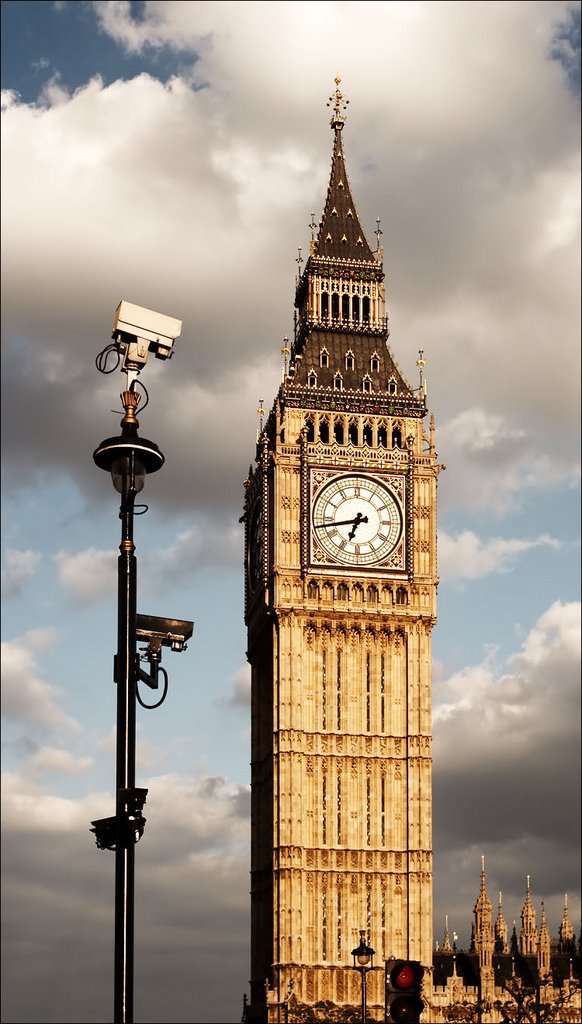
Come January I was feeling better, but I was still itching to get out of Provo. I decided then that I needed to spend a few months abroad and so I applied to BYU's London program. In February I found out I had gotten in and in September 2003 I hopped across the pond to spend the next four months of my life as an ex-pat.

I didn't realize it at the time, but my semester abroad changed my life. In fact, I often divide my life into two halves: pre-London and post-London. Even now---nearly three years after my study abroad---I can still see its effects in my every day life:

1.) My job. When I was in London, I became fascinated with museums and I decided to pursue a career in the museum world. After I returned to BYU, I interned at the Springville Museum of Art in Fall 2004 and at the MOA in Winter 2005. These internships helped me land an internship at the National Air and Space Museum---where I currently work.

2.) My graduate studies. After my semester abroad, I took a history course from Dr. Paul Kerry. Dr. Kerry was a wonderful teacher and he was also a wonderful advisor and friend. He encouraged me to pursue a graduate degree---and to pursue it in the U.K.

Dr. Kerry undertook his PhD at Oxford and he knew I was enamored with British life. "Why not get your masters done in a year and enjoy yourself in England?" he asked. What wonderful logic!

3.) My trip to China. The class I took from Dr. Kerry was entitled, "Public History and Popular Memory." Basically, we studied history in the public sphere---museums, memorials, historic homes, documentaries, etc. After we studied the failed exhibition of the Enola Gay (ironically at the National Air and Space Museum), I became fascinated by how museums reflect and shape public opinion.

Thus, I decided to apply for an ORCA grant to study museums in communist China. In May, I went to China for the first time with my papa. Not only did I visit a lot of museums, I also got to eat a sea cucumber! (Kind of gross.)

Coincidentally, when I visited the Great Wall, I struck up a conversation with a professor from a college in California. I expressed to her that I wanted to study history in the U.K.

"Have you ever thought about the London School of Economics?" she asked.

Enough said.

4.) My friends. I consider myself such a lucky girl to have met so many wonderful people on my study abroad: Alexis, Kristen, Janice, Lisa, Lindsey, Kristen D., Heidi, Kim, Leslie---oh, the list is endless! And I'm headed to Las Vegas tomorrow to attend Alexis' wedding!

5.) My first real, earth-shattering heartbreak. Hmmmm...we probably don't need to go into detail about this! But my first real heartbreak has taught me so much about love, about marriage, about relationships, and about faith. It has broken my soul and it has challenged me in ways that I never thought I would be challenged. It has been the toughest trial in my life (I guess I haven't been through very much, eh?). But I have emerged from it a stronger and a more open-minded person. I have learned greater empathy and greater patience. I know I am a different person because of it---and for the better.

So there you have it. How did I get to this point in my life? Through a lot of little choices here and there, through a few big trials, and through a lot of prayer and faith.

As I embark upon my second journey to London, I can only hope that it will be as fruitful as the first.


They're Mine!


Whenever I have lunch at the National Gallery of Art, I just have to stop by the 4th floor to look at my Georgia O'Keefe's. (I like to say their my O'Keefe's because I'd like to own one some day. This, of course, is a near impossible dream!)

I was never a fan of O'Keefe until I saw her work in person. Only then did I see the careful gradiation of her colors, the smoothness of her strokes. Her paintings are so bold, yet feminine. And for some reason I think they look very American.

Some people say that OKeefe's paintings display overt sexuality--- that they look like female genitalia. (I suppose I can see a resemblance. In a sense, flowers are vaginas after all.) But when I look at an O'Keefe, I see pretty colors swirling together and I see peace. I guess that's why I love to visit the 4th floor whenever I get a chance.

10 Hour Work Day with No Pay, but Utterly Satisfied


On August 28, 1963, a crowd of 350,000 Americans flooded the National Mall to participate in the historic March on Washington for Jobs and Freedom, where Dr. Martin Luther King Jr. delivered his iconic "I Have a Dream" speech. Six years later on November 15th, 1969, over 500,000 protestors rallied together on the Mall to denounce the Vietnam War. And in 1987, half of a million gay men and women gathered to demand equal rights.

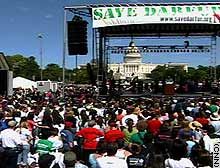
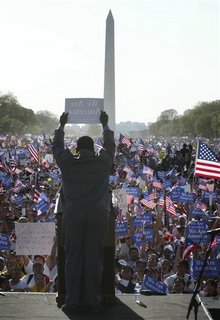
Since 1894, over twenty protest marches have taken place on the National Mall, with most of them attracting crowds that numbered in the hundreds of thousands. Thus compared to its predecessors, the Rally to End Genocide (which took place on Sunday) was a small-town gathering. The JTA gave an estimate of 75,000 partipants while The Washington Post tallied a mere 10-15,000. Nevertheless, the rally, which was held beneath the towering height of the Capitol, was a success. Whereas protests for civil and gay rights attract a relatively homogeneous crowd, the Rally to End Genocide attracted a spectrum of American and international participants.

The first participants I met were three high school girls from New York City who came down with their local JCC. My friend Lauren met an elderly woman who came to the rally with her synagogue. Participants hailed from Boston, Philadelphia, and Portland, Maine. Some people drove all night from Atlanta; others flew from Seattle. Parents brought their children; teenagers brought their parents; grandparents came with other grandparents. I saw white faces and black ones, Asians and Indians. I encountered Jews, Muslims, and Christians. I even chatted for a few minutes with one of my friends from BYU---a Utah boy who was spending his Sabbath protesting for Darfur.

My fellow volunteers were an eclectic bunch. One of my favorite volunteers was Steve Orrison, who worked for NATO for eighteen years and who was married to a French woman (who was also volunteering at the rally). Both of them were in their sixties. And even though Steve has back problems, he spent the entire day lifting and carrying boxes, working from nine in the morning well into the evening.


Then there was Samantha, a rail-thin blonde who was a freshman at George Washington University. There was Lauren, a graduate of Penn who worked in micro-finance. There was an African-American teacher who lived in New York City during 9/11. There was a seventy-year old man who had a long white moustache and wore a cowboy hat.

Many volunteers were recent graduates who now work in the non-profit world. I felt a kinship with them, even though they majored in international relations or public health when they were in college. I think a lot of us dreamt of saving the world after graduation, building huts in Peru or teaching English in Africa. But I guess the logistics of the "real world" eventually burst our bubble, making us realize that we can't save the world on $30,000 a year.

We worked hard at the rally---lifting boxes, unloading trucks, selling merchandise, policing the crowd, picking up trash. We put our hearts into what we did because, sadly, this was all we could do. No matter how loudly we shouted for help to save the refugees in Darfur, we needed the government's help to bring this tragedy to an end.

And so when the rally concluded, I felt a sense of hopelessness. Sure, I spent the entire day as a volunteer, but was that enough? Could a little rally in Washington, D.C. salvage the lives of millions of Sudanese refugees? Would the rally cause the government to take more political action in Darfur?

The lesson I learned is this: no matter how hoarse our voices become, we need to keep shouting for help. We may not be able to end the genocide in Darfur, but that doesn't mean we should do nothing. Apathy is our greatest enemy. As long as the genocide ensues, I will continue to volunteer at the Save Darfur Coalition. In the end, we may fail and we may fail miserably. But our time will not have been wasted. A worthy cause is never a waste. Hope is never a waste.

Again, we may fail, but there is also a slim chance that we may succeed. Today, President Bush urged the president of Sudan to bring peace to Darfur. Our hope has brought us this far; and I can only hope that it will bring us even farther.

The Parable of Good Intentions

Before we started our lives here on Earth, I'm sure we had some sort of preparatory interview with the Big Man Upstairs. We probably sat in his office nervously, biting our lip and worrying about if we would like our parents.

"So it's your time to ship out," the Big Man says.

"Yes sir."

"When do you report for duty?" He asks.

"Next week, sir."

"You look a little green, ensign. Nervous?"

"Y-yes."

"Well, I won't be sending you down unprepared, soldier!" The Big Man walks around His desk and places a heavy hand on my shoulder. "After all, you've spent eons here in the pre-existence getting ready for this moment. You've done OK so far."

"Thank you, sir."

"And I never let a soldier ship out without some parting advice and a gift!"

I perk up a little bit. "Thank you, sir!"

"Here's my advice: keep your chin up, play fair, and be nice. Don't be scared of anything, even if the devil's shotgun is staring you in the face. Above all, return with honor."

"I'll try, sir."

"What's that, soldier? I can't hear you."

"I'll do it, sir!"

"That's more like it. And as for your gift...hmmmmm...well, I'll give you a good dose of 'good intentions.'"

"Thank you very much!"

"Well, yes," He chuckles, "We'll just have to see what you do with it."

My head fills with hope. "I'll do my best, sir!"

The Big Man shakes my hand and sees me to the door.

"Ensign?" He calls after me.

"Yes, sir?"

His voice is deep, his eyes sincere. "You can reach me any time, you hear that?"

"Yes, sir. Thanks again!"

And that was that. I headed down to Earth the following week, clutching my precious gift to my chest. The gift of good intentions! What a marvelous thing, I thought. As long as I had good intentions, then I would be a good person. As long as I had good intentions, I would do what is right and help others in need.

Ah, such naivete! I've come to realize over the years that the duality of the universe is a very tangible thing: black and white, good and evil, ying and yang. And of course, good intentions and subsequent actions---of which I have many personal experiences with. Why don't I follow through on my good intentions? Because I'm lazy.

(One of the laziest years of my life---freshman year in college.)

Every day of my life I think of nice things to do for the people around me, but rarely do I follow through. I see a homeless man begging for change and I walk by with the intention of giving him some money the next day. I think about writing a note to my roommate to tell her how grateful I am for her, but the thought slips through my mind. I want to bring some cookies to my visiting teachees, but I lose track of the time. Egads, Caroline! Why don't you finish what you set out to do?

And so my goal for this week (maybe I should make it a month) is to follow through on all of my good intentions. I want to bake some banana bread for my fellow volunteer whose great-grandmother passed away this week. I want to exercise everyday and eat healthier foods. I want to write letters to my roommates, expressing my appreciation for their friendships. Et cetera, et cetera.

I already have one story of success! I am volunteering at the Rally against Genocide this upcoming Sunday. The past few months I have wanted to help out with the situation in Sudan, but I've failed to come up with any solutions. Darfur has taken a backseat to sleeping, eating, and shopping. But enough! No more laziness. I'm going to be a volunteer at the rally and do whatever I can to help out (which isn't very much, but I need to try anyway.) It'll be a long day---12 hours!---but I'm so happy that I have this opportunity.

You are banished from my life, lazy Caroline!

Eeeenteresting...


A Mormon in the White House?

I just read an
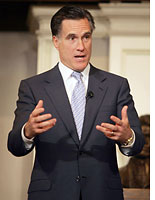
article on Slate.com about Mitt Romney's bid for the 2008 presidential election. It focuses on Romney's Mormon faith and how he's bungling the portrayal of his religious beliefs to the media and to voters. At the end of the article, the writer makes an interesting remark that Mormonism may seem weird to outsiders because the religion was established so recently: "The LDS Church seems strange because it's new, which makes the human agency behind it especially palpable. In contrast, the passage of time has given the weirder aspects of other faiths a patina of sanctity."

If you're hungry for more Mormon fare, read this article in The Phoenix. It talks about the Mormon voting bloc and how it is a force that needs to be reckoned with in the upcoming elections.

A Rant in which I Sound like a Cranky Old Woman


When the Republican Party first formed in the 1850s, it waged war against the "twin pillars of barbarism"---slavery and polygamy. In the eyes of the Republicans, the moral crises of the nineteenth century was centered on the practice of these two acts. By 1900, the Republicans had won their war: the thirteenth amendment outlawed slavery in 1865 while the Mormon Church abolished the practice of polygamy in 1896. The twin pillars had been effectively toppled.

Now in 2006, some Americans would assert that the twin pillars of barbarism have returned---this time in the form of abortion and gay marriage. Religious conservatives decry the legalization of abortion and are lobbying for Roe v. Wade to be overturned. Gay marriage is viewed as a mockery of the traditional union between a man and a woman. Once again, the Republican Party has waged war against these moral pillars of "barbarism." On the other side of the battle, liberal Democrats condemn limitations on abortion and view South Dakota's House Bill 1215 as a slap in the face. They also support the legalization of gay marriage, citing that marriage is a right that homosexuals should not be denied.

As the mud-slinging ensues, the true pillar of barbarism wrecks havoc in our daily lives. It is a disease that can affect any American, regardless of race, sex, age, or sexual orientation. It doesn't care if you are a Democrat or a Republican, whether you support abortion and gay marriage or oppose them. The symptoms are always the same: bloodshot eyes filled with dollar signs, an appetite for luxury, a growing canker of economic inequality, and a nation filled with cold hearts and I-deserve-it attitudes. Diagnosis: greed.

In 1990, the Census Bureau reported that the richest one-fifth of American households received almost twelve times the income of the bottom one-fifth of the population. In a report conducted by the Economic Policy Institute, economist Eric Wolff cites that the upper crust of Americans (the top-half of one percent) saw a 26% increase in their average net wealth between 1983 and 1989. On the other hand, the net wealth of the bottom 80 percent of Americans went down by an average of 6 percent over the same period. The rich are getting richer and they don't like spreading the wealth.

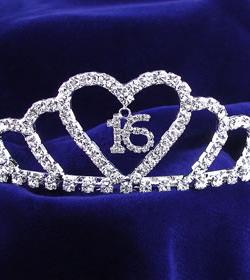
Like a tick, materialism has sunk its deep fangs into our daily lives. Television shows and movies project the slogan, "Less isn't more; more is more." Shows like MTV "Cribs" gives us an inside look into Master P's gold-plated bathroom, G-Unit's pimped out Hummer, and Shaq's indoor basketball court. On the teen romp, "My Super Sweet 16," participants spend tens of thousands of dollars to throw a glorified birthday party. Depending on the wealth of their parents, the costs for the party can exceed a hundred-thousand dollars. For these brats, a pony just won't do.

Filthy-rich celebrities and spoiled teens are not the only Americans spending their money like it's no tomorrow. My 14 year-old sister is currently a freshman in high school and all of her friends have cell phones, iPods, and Seven jeans. When I attended high school, many of my classmates received a new car on their birthdays. Growing up, we went to a ward where many of the members owned two homes and drove to church every Sunday in their BMWs and Lexuses. Years ago Americans were encouraged to "save, save, save," but now we have replaced this motto with "have, have, have."

In order to have, have, have, we are required to spend a lot of money---sometimes all of it. In China, the personal savings rate is more than 40 percent; but among Americans it is less than zero. Credit card debt plagues our nation.When I was at BYU, I often heard that Utahns had one of the highest amounts of debt in the country. Many of my friends attributed this statistic to the high number of young newlyweds who maxed-out their plastic at RC Willey to furnish their apartments. And this past October when I flew from Salt Lake to Baltimore, I sat next to a man from Sandy who lamented about his neighbors and how they tried to "one-up" one another: fancy cars in the driveway, a heated pool in the backyard, and a membership to an elite country club. Forget about keeping up with the Jones's---they wanted to be the Jones's.

Americans are increasingly associating materialism with happiness. We clock in hours at work to gain promotions and bonuses while we dole out our childrearing responsibilities to a nanny. We spend money on fancy vacations and luxuries while people around us are hungry and homeless. Even worse, we tend to look down on the poorer classes, equating their economic status with laziness and stupidity. Yet in Barbara Ehrenreich's book Nickel and Dimed, Ehrenreich, who spent several months trying to make a living as a blue-collar worker, noted that her co-workers often had to hold down two full-time jobs to make ends meet. Now if a sixteen-hour work day is considered lazy, then I have no idea what my eight-hour work day would be considered to be. Comatose?

And not only do we snub our noses at the poor, we justify our expenditures with excuses like, "Well, I earned this money fair and square. My money should be spent on my needs." Honestly, we are beginning to sound like a bunch of kindergarteners. Hording our crayons is selfish and just plain mean when little Jane doesn't have anything to color with. As professor Richard Johnson of BYU has noted, "We deny the obvious truth that there is always a more Christian use for money that is spent self-indulgently."

Of course, I don't believe that we should all subscribe to a life of asceticism and abandon our homes for tents. It is not wrong to make a lot of money and it is not wrong to spend money on yourself. If we worked hard for our salaries, then we should deserve a little bonus for it: a new pair of shoes, a new laptop to replace an old one, or a vacation to Hawaii perhaps. But too often we come to worship these "little bonuses" and they quickly metamorph from shoes and a laptop to a Bentley and a second home. Again, it is not wrong to spend money on yourself, but it is wrong to be selfish with it. Human beings require so little for survival and so much happiness can be gained by helping our fellow man.

I too suffer from greed. Indeed, I tackle this issue with a passion because I'm trying to banish greed from my own life. Too often do I receive a paycheck and I head to the mall. Too often do I pass a homeless person on the street and fail to open my purse. And too often do I dream of elaborate vacations and fancy cars instead of concocting what charity I should send money to. We could all live with a little less and we could all give a little more---especially me.

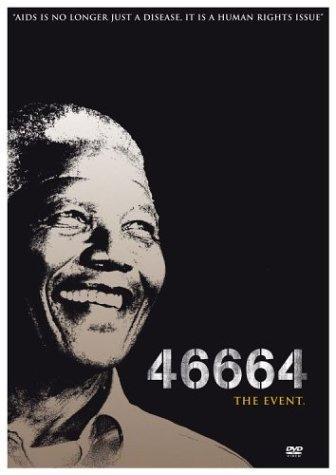
Pour Me Some More of that Nelson Mandela


"Our deepest fear is not that we are inadequate. Our deepest fear is that we are powerful beyond measure. It is our light, not our darkness, that most frightens us.

We ask ourselves, who am I to be brilliant, gorgeous, talented, and fabulous? Actually, who are you not to be? You are a child of God. Your playing small doesn't serve the world. There's nothing enlightened about shrinking so that other people won't feel insecure around you. We are all meant to shine, as children do. We are born to make manifest the glory of God that is within us. It's not just in some of us, it's in everyone.

And as we let our own light shine, we unconsciously give other people permission to do the same. As we are liberated from our own fear, our presence automatically liberates others."

--- Nelson Mandela

What a sobering quote! What a wonderful motto for life.

Help Needed!

Dear Friends,

Last night I spent a few hours volunteering at the Save Darfur Coalition. Basically, the Coalition is an alliance of over 150 faith-based, humanitarian, and human rights organizations. The mission of the group is to lobby for federal assistance to stop the senseless killing of innocent Sudanese in the Darfur region.

Currently, Save Darfur is planning a massive rally on the National Mall to raise awareness about the genocide. The rally, which is set for April 30th, is part of the "Million Voices for Darfur" campaign to generate one million postcards for delivery to President Bush.

My main duty last night was to enter people's names and addresses onto a spreadsheet. (Wahoo!) In any other setting it would have been a mundane task, but I got really into it. I might not be able to go to Sudan and fight the Janjaweed, but I definitely can type---and type fast I can.

As I read the letters and postcards that people sent in, I was touched that so many Americans really care about what's going on in Darfur. The postcards came from Farmville, Virginia and Sunnyvale, California. They came from Philadelphia and New York and DC. I read letters from a seventh grade class in Aurora, Colorado; I processed postcards that were collected at Carleton College. It reaffirmed my faith in people.


The guy working next to me, who was named Ben and who was spending his Passover holiday as a volunteer, was collecting letters and postcards from every congressional district. Ultimately, he hopes to present a folder to every congressman (and woman) with postcards from citizens in their district. Thus far, he has received a lot of letters from Massachusetts, California, Pennsylvania, and Virginia, but still needs letters from many other states---including Utah.

So I told him that I would talk to my wonderful friends in Utah and try to enlist their help. If you're interested, all you need to do is write a short letter or postcard telling President Bush that you are concerned with what's going on in Darfur and ask him to help the Sudanese refugees. Even one or two sentences would do!

Please mail it as soon as possible to:

Save Darfur Coalition
2120 L Street, NW
Washington, DC 20037


If you don't have the time to write a physical letter, you can send in an e-postcard to the Million Voices for Darfur Campaign. For more information about Darfur, you can visit the Save Darfur Coalition's website.

Your friend,

Caroline (who wants to save the world, but only has ultra-fast typing powers to show for it)

Why I Love Volunteering

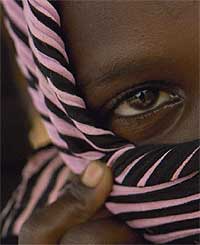
On Tuesday nights I spend a few hours working with high school students who are affected by AIDS. This past Tuesday one of the students shared with me a rap he had written for a girl named Shaquita. Two lines in particular made me chuckle:

"Yes, I got braces but I think I'm sexy too."

"If we make love, I won't call you a whore."

Ah, high school. The elixir of romance!

One Reason Why I Love America

If the federal government is run like the Smithsonian, then we all should run for the hills. Red-tape fills my museum like water in a fish tank. Because I work for the government, I am thus cynical about the government.

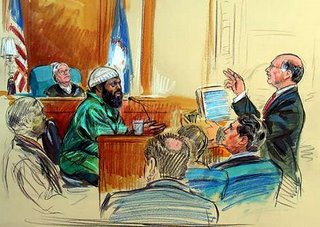
But my cynicism suffered a gentle blow when I read about the Zacarias Moussaoui case. Moussaoui faces the death penalty on the charge that he conspired with al-Qaida to plan the 9/11 attacks. He has pleaded guilty on this charge and has even asserted that he was supposed to fly a plane into the White House. When asked in court whether or not he would kill more Americans, Moussaoui declared: "Any time. Anywhere."


So here is a man pumped full of hatred towards America. When relatives of 9/11 victims testified in court about their hardships and mourning, Moussaoui scoffed at them. "I find it disgusting that some people will come here to share their grief," he said. He has asserted---under oath---that he will try to kill Americans even if he is behind bars.

It is plain to see that Moussaoui is the ultimate enemy of the United States. Yet he still receives a fair trial on our national soil. His appointed lawyer, Gerald T. Zerkin, is a public defender with experience in capital cases. Even family members of 9/11 victims have stepped forward to argue against the death penalty.The Constitutional rights to a fair trial, an impartial jury, and due process are all granted to the defendant, even though he is a French citizen.

Of course our legal system is far from perfect (ahem, Guantanamo), but it still functions rather well. Why? Because it's built upon a solid foundation---rights to a fair trial, rights to an impartial jury of one's peers, rights to proper counsel, rights to a speedy and public trial. The Constitution is a remarkable machine that has worked for over two-hundred years.

So take that, Zacarias Moussaoui and al-Qaida. You can't tear us down with terrorist attacks and scare tactics. You can murder our soldiers and our civilians, but you cannot destroy our America. The America I love is not defined by race, religion, or geography, but by rights, freedoms, and liberties. The America I love is intangible.

This is one of the many reasons (along with Cadbury Mini Eggs) why I love my country.

Healing Hearts One Music Video at a time

Are you bored at work? Are you nursing a broken heart? Are you feeling down in the dumps?

Watch this music video and you'll be perky again in no time!

Directions:

1.) Choose the format you want to watch the video in: Quicktime or Windows Media Player.
2.) Sit back and enjoy.
3.) Laugh, laugh, laugh.

Cheesy Chinese music is the best! (If this guy looks familiar to you, it's because he goes to BYU. You may have seen him running around campus doing kung-fu and wooing Asian girls.)

Something Strange About "The Girls Next Door"

Once upon a time in a place called Southern California, there lived a very old man and his three beautiful bunnies. All of them lived in a very big mansion with a pool, a zoo, and dozens of bedrooms. The three beautiful bunnies each had their own room and sometimes they would share it with the very old man. And even though the very old man was as old as a great-grandpa, the three beautiful bunnies loved him because he was rich and famous and swallowed a blue pill with every meal.

* * * * * * * * * * * * * * * *


As I flipped through the channels this weekend, I happened across an interesting reality show called "The Girls Next Door," which chronicles the lives of Hugh Hefner and his three girlfriends. After watching the show for ten minutes, I came to the conclusion that the show consists solely of bleached-blonde hair, fake boobs, and high-pitched giggles. I don't recall the names of the girls (it's hard to remember a face when it's obstructed by two gigantic breasts) but for the sake of this blog I will deem them Candy, Bambi, and Maureen.

In this particular show, Candy and Bambi don their bunny suits for a photo shoot. Maureen, for some reason or another, doesn't want to be a bunny and doesn't want to be part of the shoot. This confuses Candy and Bambi, who are often confused anyway.

"Why doesn't Maureen want to put on this cute bunny suit?" Candy breathes huskily.

"I have no idea," huffs Bambi as she tries to squeeze her double-D's into her suit.

"I just don't understand Maureen sometimes," Candy says, "It's an absolute honor to wear the Playboy bunny suit."

Bambi nods. She still can't get the zipper closed.

"I mean, when I wear my suit I feel so important. Not every woman has posed in Playboy, you know what I mean?"

Bambi faints. Her boobs are too big. They crushed her lungs.

* * * * * * * * * * * * * * *

(OK, so Bambi didn't really faint, but it did take the strength of two gay men to finally get her zipper closed.)

"The Girls Next Door" brought up a few questions in my mind:

*Doesn't it bother these girls that they have sex with an 80 year-old man?

*Doesn't it bother these girls that they have to share this 80 year-old man with two other women?

*Why does "Big Love" get so much more media attention than "The Girls Next Door"? "Big Love" may chronicle the life of a man and his three wives, but "The Girl Next Door" has so much more to offer---an old fogey, three blonde girlfriends, and six enormously fake breasts.

*Mommy, where do Playboy bunnies go when they grow old and wrinkly and their boobs deflate?

And a final comment: It is commonly believed that the man has subjagated the woman throughout history---judging her by her beauty while ignoring her intellect. How interesting then that in our feminist age, it is the woman herself who is propagating this notion.

The Gift of the Promised Land

My parents are immigrants. They were born in Taiwan, raised in Taiwan, met in Taiwan, and got married in Taiwan.

I am not an immigrant. I was born in America, raised in America, went to college in America, and now work in America. I have never been to Taiwan.

My parents came to the United States so my father could attend graduate school at the University of Virginia. (He got his MA in Chemical Engineering---what a smart papa I have!) After grad school, my parents moved to the DC area and settled down. My two siblings and I were all born in Maryland as citizens of the United States. We didn't have to go through endless paperwork to obtain our naturalized status; all we had to do was to be born at the right place.

* * * * * * * * * * * *

On Monday there was a rally at the National Mall. Because I work at the Smithsonian, the Mall is basically my front yard. I saw hundreds of people at the rally, many holding Mexican or El Salvadorean flags. I saw a few white faces mixed in with a sea of brown ones. I heard English and Spanish spoken, blending together like a creamy soup.


When I think of the term "illegal immigrant," my mind conjures an image of a Mexican family struggling across the Rio Grande in an attempt to enter the Promised Land. It's funny how a few words can conjure such a stereotypical image in my head.

In the mid 1800s, the term "immigrant" represented Chinese or Irish immigrants. Granted, these groups came to the U.S. legally, but they faced the same persecution and prejudice that illegal immigrants face today.

I don't see many Chinese or Irish-Americans speaking out for their Latino cousins. Perhaps this is because once we obtain our American status, we also obtain an elitist mentality.

* * * * * * * * * * * *

Sometimes I have this elitist mentality. I look at illegal immigrants and I only see them as a burden. They make our taxes rise; they put a strain on public schools and hospitals. They take jobs from Americans.

But when I take an honest look at these people, I see my parents. I see mothers and fathers who want to provide better opportunities for their kids. I see hard-working individuals who want to make an honest wage. I see families who want to take part in the American dream---education, jobs, safety, and a place to call home.

Yet the problem persists. Illegal immigrants are first and foremost illegal. They may have honest intentions (and many of them do indeed pay taxes and Social Security), but they are still breaking the law. The population of illegal immigrants is also on the rise and so if the government fails to do anything about this, then the problem will just continue to multiply.

I don't know what the best solution is, but I like this quote I found in Time magazine from Frank Sharry, the executive director of the National Immigration Forum:

"The only way to restore the rule of law to our immigration system is to have policies that respect the laws of supply and demand. As someone who's been debating this thing for 25 years, I can say the debate was polarized. It was an either/or debate: more visas or more enforcement. We finally came up with the answer: Yes. We should do both.

This isn't so much a policy debate. It's a battle for American identity. Are we the people already here, or are we a set of ideas and ideals that are universal, such that the people who come here and subscribe to those ideals are American? You can never become a German if you weren't born in Germany. But you can become American. America is permanently evolving. That scares some people, but that's what we're all about. Do you keep it the way it is, or do you keep re-energizing the country with fresh people and fresh ideas?"

I agree with Sharry. The American identity cannot be defined by race, religion, or sex. Instead, our identity is shaped by certain ideas and ideals that are intrisically "American." The United States was built upon a celebration of freedoms---the freedom of worship, the freedom of speech, the freedom of the press, the freedom from an oppressive monarch, etc. To become an American, one must embrace these freedoms in which the country was built upon. And to become a true American, one must uphold the rule of law. Thus, illegal immigrants should do whatever they can to become legal citizens. And it is up to our leaders to help them make this transition.

**Many protestors at the DC rally held up signs that said: "We are Americans." But technically they aren't. They may live in America and they may embrace the liberties we enjoy in this country, but they are not legal citizens. Thus they aren't full-blooded Americans (cousins perhaps). I'm not saying that they shouldn't be granted citizenship, but rather a certain criteria exists to be defined as an American.**

The Boogeymen Lurking in My Closet


The night-light was a fixture of my childhood. Like many children I was afraid of the dark, but unlike most children I took this fear to the next level. I was absolutely, positively, mind-numbingly terrified of the dark. The darkness crippled my senses: I couldn't speak, I couldn't move, and I couldn't scream for help. All I could do was curl up into a little ball, shut my eyes tightly, and pray for daylight to come.

I don't know how it happened, but my fear of the dark gradually dissipated. By the time I hit high school, I had mostly overcome my fear. Maybe I became more courageous or maybe I just grew up. Admittedly sometimes I still get the heebie-jeebies when I'm in absolute darkness, but other than that I'm pretty much cured.

I've conquered my fear of darkness, but my childhood fears has been replaced with many adult ones. For instance, I'm afraid of acting too needy so I close myself off emotionally. I'm afraid of rejection so I never flirt with the guys I like. I'm afraid of going into debt so I'm rethinking graduate school. And so on and so forth.

My life is not ruled by my fears, but I recognize that they do hinder me---and I don't like this. Fear leads to cowardice and regret and I don't want my life to be full of regrets. When I am eighty-five years old (hell, even when I'm forty-five), I want to look back at this period of my life and happily say that I lived life to the fullest. And I really don't think I can live life to its full capacity if I let fear dictate my actions.


So now I face the challenge of confronting my fears---whether big or small---and quashing them like little gnats. I'm not very brave and I'm not very strong, but I have faith in myself that I can conquer any trial that comes my way.

Isn't it ironic then that one of the hardest trials in my life is facing my own fears? Isn't it ironic that my greatest enemy is a product of my being?

The Littlest (and Tastiest) Banana

Along with pecan pralines, I was also introduced to dessert bananas on my trip to the South. Dessert bananas are just like regular bananas but smaller. Cassandra's mom thought dessert bananas tasted sweeter than their regular-sized cousins, but I thought the little naners tasted the exact same.

I usually don't eat bananas plain (I like to cut them up and eat them with Cheerio's) but for some reason I couldn't stop devouring the little dessert bananas. Like pralines, they are addictive.


Cassandra and I decided that dessert bananas are more appetizing for the sole reason that they are so small. I see this phenomenon pop up with other "dainty" foods like donut holes, little fruit tarts, miniature cream puffs, and those adorable tiny rounds of cheese.

When we see a regular-sized donut we may think: "I don't want to eat an entire donut." But put a little donut hole in our line of sight and we begin to think otherwise: "Well, I can make room for just one." (Which is always false doctrine because you inevitably eat a second one and then a third, and before you know it you've eaten the entire box of donut holes.)

So the moral is this: the smaller a piece of food is, the more you want to shove it in your mouth. Humans are such carnal creatures! (Well, maybe just me.)

I Scream, You Scream, We All Scream for Pralines

I can feel it. Even though it's only April, I know 2006 will be a watershed year for me.

In January 2006 I started my first real job. In September 2006 I will start graduate school. And by the end 2006 I will have doubled my current weight. Why? Because I discovered the South's forbidden fruit---the pecan praline.

This past weekend I headed down to Charleston with my good friend Cassandra. We went to South Carolina to attend her best friend's wedding, but also to indulge in the lovely beauty of Charleston. Visiting the city appealed to me especially because of its pre-Revolutionary history. I also love the Roaring Twenties and so I can't think of Charleston without thinking of dancing flappers.

But what started out as an innocent trip to celebrate a wedding turned into a dark journey into a sugary hell. As we walked around Charleston's marketplace, we drifted into a candy shop that specialized in pecan pralines. I was wooed by the free sample that one of the employees handed me. ABSOLUTELY DELICIOUS! My mouth filled with a heavenly blend of brown sugar, cream, butter, and pecans. So simple, yet so sinfully good.


(OK, they may not look that appetizing, but looks are very deceiving!)

I am no doctor, but I gobbled down so much sugar this past weekend that you can diagnose me as a diabetic. Pecan pralines are so sweet that one bite makes your teeth ache with its sugary content. I'm usually not a big fan of too-sweet treats (superfluous amounts of icing makes me gag and I always favor bittersweet chocolate over milk chocolate), but I am a big-time sucker for pralines.

My newfound addiction to pralines must be connected to my passion for sugary-coated nuts. I love honey-roasted peanuts and I adore the cinnamon almonds sold in the mall every Christmas. Whenever I go to NYC, I ignore the hot dog and pretzel vendors and head to the guy who sells sugar-encrusted nuts.

So there you have it: I'm an addict. Help?

The Fairer Sex? How about the Tougher Sex.


After watching the movie "Memoirs of a Geisha," I thanked my lucky stars that I was born in America after the feminist movement. I can't imagine living the life of a geisha---having my livelihood chained to the fancies of men and being forced to play the role of a sexual servant. Even if the movie ends on a happy note, the main character Sayuri will never be more than "a wife of nightfall" to her beloved Chairman.

If we reduce women into glorified sex objects, then we are in effect reducing their humanity. A woman's societal worth becomes based on her beauty and sexuality rather than her personality and intelligence. Such sexism is not only manifested in Japan, it has run rampant throughout world history in the form of rape, prostitution, forced marriages, polygamy, and slavery. Women have been denied access to education, to suffrage, and to positions of power. A woman without a husband---without a man to take care of her---was pitied and even scorned. Her "worth" was inherently tied to the fertility of her womb and the ability of her cooking and cleaning skills.

Only within the past century have we witnessed the blossoming of feminine equality in our societies. Women are no longer viewed as second-class citizens. We are now given the keys to unlock their dreams; we enjoy basic unalienable liberties that for so long have been denied. Of course in many parts of the world women are still subjagated to men, but the precedent for women's equality has been set in America, in Europe, and even in third-world countries like Liberia.

In January 2006, Ellen Johnson-Sirleaf was sworn in as president of Liberia, making her Africa's first elected female leader.

Yet as Anna Quindlen has so insightfully remarked, oftentimes the women of my generation take for granted the equality we enjoy today. Growing up as children of the eighties, we were surrounded by (and many times raised by) working women who straddled the realms of career and family. We were taught in our homes and at our schools to dream big. The question, "So what do you want to be when you grow up?" was filled with endless and achievable possibilites.

Too often we forget that such possibilities were indeed merely dreams even fifty years ago. Names like Susan B. Anthony, Elizabeth Cady Stanton, and even Betty Friedan ring a bell in our minds, but can we really recall what these women did for us? We owe it to ourselves to become acquainted with these women because after all, we are reaping the harvest of their hard work and dedication.


We also must not forget that the fight for equality has not ended. There are millions of women worldwide who are still unable to vote or receive an education. There are millions of women who are illiterate. The work is not finished! We need to roll up our sleeves and assume the helm that Susan B. Anthony and Elizabeth Cady Stanton once held.

Women all over the world need to hear the message that is so plainly stated in the Talmud: "The woman came out of a man’s rib: Not from his feet to be walked on. Not from his head to be superior, but from the side to be equal."

Before Pearl Harbor, Japan was pretty nice to us!

Last Friday, my friend Amanda and I headed down to the Tidal Basin to catch a glimpse of the cherry blossoms. The National Cherry Blossom Festival takes place every March or April to coincide with the annual blooming of these white and pink blossoms. This "rite of spring" in our nation's capital attracts hundreds of thousands of visitors every year. Indeed, the walking paths along the Tidal Basin were crammed with strollers and digital cameras on Friday.

Back in 1912, the country of Japan presented over three-thousand cherry trees to the United States as a token of friendship. A few of the original trees were planted together by First Lady Mrs. William Howard Taft and Viscountess Chinda of Japan. Thousands of trees were planted along the Tidal Basin, which is a body of water that flows by the Washington Monument and the Jefferson Memorial. Since their christening in 1912, millions of visitors have flocked to DC every spring to see the billions of blossoms.

As a native of the DC area, my family would often head to the Tidal Basin to walk around the cherry trees when they were in full bloom; but since I've been in Utah for the past five springs, I have missed the festival for far too long. (They're so pretty, eh?)

Sadly, a thunderstorm last night knocked a lot of petals to the ground. I talked to a guy who was down by the cherry trees during the storm and he said it looked like it snowing because they were so many little white petals fluttering about. Oh well. At least I got to see them before they were prematurely destroyed!

The Best Thing About Easter...

When I think about Easter, certain images come to life in my mind. I see green grass and newborn flowers. I see little girls in pastel dresses holding baskets of chocolate treats. I hear children laughing as they turn white eggs into funky blue and pink orbs. And I smell the delicious scent of honey-baked ham and cheesy potato casseroles. Yum.

But ultimately for me, the true meaning of Easter can be boiled down to two important tenets:

1.) The Resurrection of Jesus Christ---a doctrine that lies at the foundation of Christianity. How often we forget the original purpose of Easter, which is to celebrate this event.

2.) Cadbury Mini Eggs---perhaps the most delightful concoction under $3. Sometimes I wish that I could have Mini Eggs all year round, but then again I probably would get sick of them. You know what they say: "Too much of a good thing..."

If you really think about it, the Cadbury Mini Egg perfectly reflects the true meaning of Easter---new birth (the egg itself), purity (the white ones, at least), and eternal life (well, this one is a stretch...but come on, what is eternity without Cadbury chocolate?).

So as Easter approaches, what better way to reflect upon this holiday then to enjoy a few Cadbury Mini Eggs? Amen.


Riding the Crimson Wave

***Warning: If you are squeamish about periods (ie, if you are a man), then don't read this blog entry. You have been warned.***

I have always been a stickler for getting places on time. Job interviews, meetings, doctor's appointments, and even movie showings---I always try to arrive a bit early. This penchant for promptness must be deeply ingrained within my body because it is manifested in my monthly cycle. After I got my first period at age 12 (which shocked the living daylights out of me), my period has been as reliable as a Swiss watch.

Like a credit card bill that turns up in your mail every 10th of the month, my period is a regular---and irritating---part of my life. Whenever my skin starts to break out and my abdomen begins to swell, I know it's time to stock up on my Always and Tampax. Aunt Flow has come for a monthly visit for over ten years of my life. Ten years! That means I've spent well over five hundred dollars on feminine products alone. Do you know how many pairs of shoes I could buy with five hundred bucks? Or how many orphans I could feed?

Spending money on maxi-pads and tampons is only the start of my problems. There's also the mind-numbing cramps and the ever-pressing worry of leakage. (Gross.) On top of the pain is also the inability to wear light-colored pants when I have my period--- just as a precaution, but a necessary one. And don't get me started on the cute pairs of underwear that have been ruined due the early arrival of an unexpected "guest." (Gross again, but very true.)


Yet if there is one good thing about my period, it is its reliability. If I have to suffer through this bleeding every month, then I might as well know when to expect it---and my period has been happy to oblige in keeping a steady arrival/departure schedule. If my period arrives on the 20th of June, then I can expect to have my next one around the 20th of July. Easy as that. In the past ten years I have never missed a period. Yes, I have been late to a few meetings and I've missed a few previews at the movies, but I have never missed a period.

And so it really worried me this month when my period was two weeks late. I have been over a week late before, but that was during a time of my life when I was really stressed out and not eating properly. This month however has been relatively stress-free so I couldn't understand why my period was ignoring me.

Irrational fears began to swirl in my head. Could I be pregnant? Of course not, I thought. Pregnancy requires sex and let's just say I've been in a dry spell for over two decades. Then my fears swung in the opposite direction: what if I was infertile? Did I use up all my eggs? I cursed my ovaries. They should have told me they were running low on supplies!

Pregnant? Infertile? I began planning a trip to the doctor when...hallelujah...my period arrived to save the day. Phew! I wouldn't become the next Virgin Mary and I still have a few eggs to spare. My fears were sloughed away.

So my period was two weeks late---but for the first time in my life, I've never been so happy to see it arrive.